PORTUGAL: Caves, Crosses, & Castles
Continuing south, my next destination was Fatima - a city steeped in religious fervor. In 1917, three children reported visions of the Virgin Mary, speaking to them of prayers for world peace. Since then, the city has become the destination for many a Catholic pilgrimage. While I find basilicas, shrines, sanctuaries, and chapels beautiful and interesting, I was not embarking on a spiritual journey, at least not a Catholic one. I chose Fatima because of its proximity to two other destinations - Grutas da Moeda and Tomar.
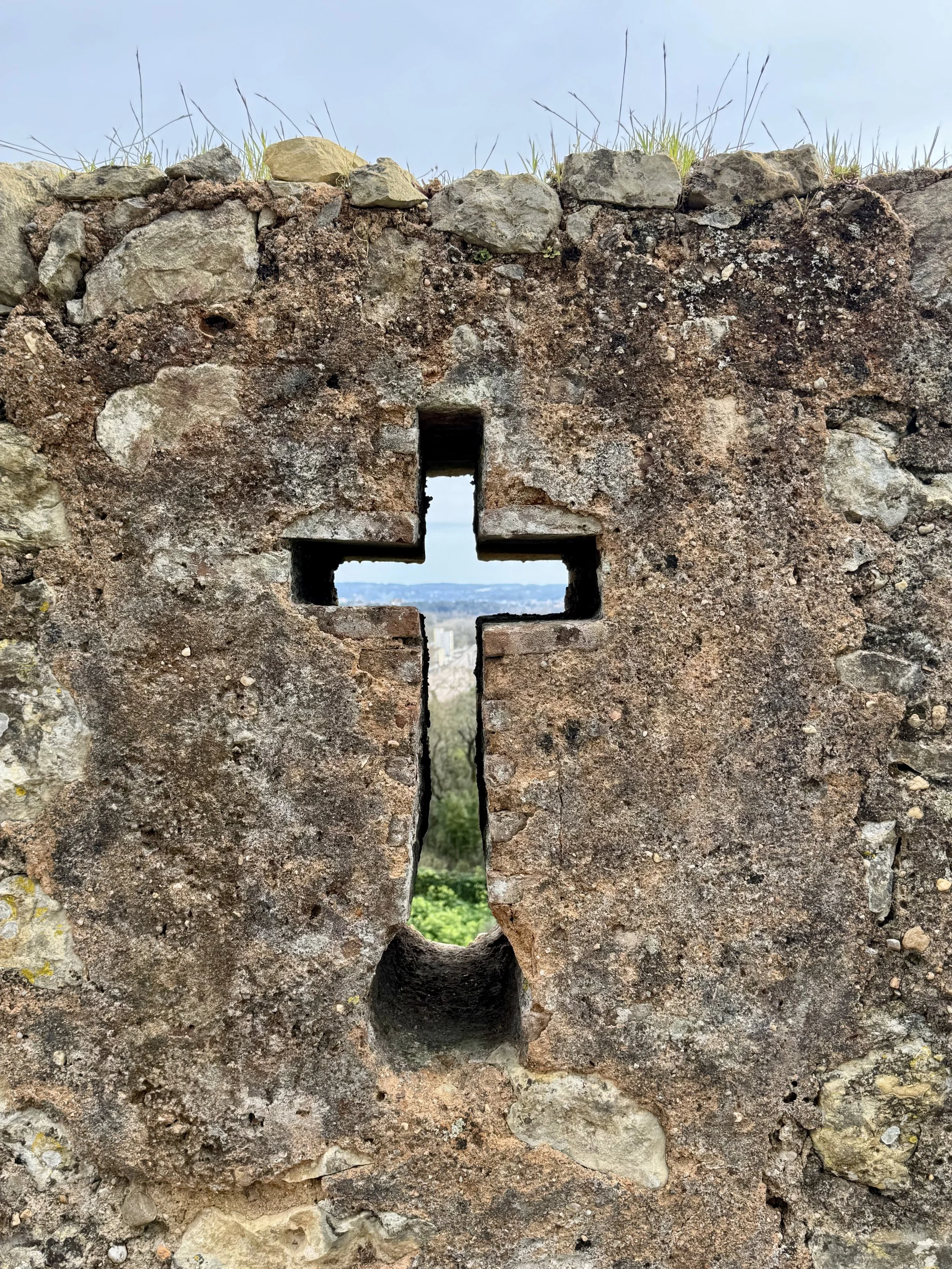
Castle Tomar
The first, Grutas da Moeda, also known as the “Coin Caves,” is a set of limestone cave formations only about five kilometers from Fatima. The second is Tomar, the city seat of the Knights Templar and a chance for me to visit yet another castle. Tomar is accessible by bus and was a perfect day trip. While in Fatima, I did also visit some religious sites; it’s difficult to walk around the city without bumping in to several. Coimbra and Fatima are vastly different cities. One is steeped in focus and steadfast academic pursuits, like a hush in a vast library. But for the magnificence of faith and stone edifices reaching up to the sky, the other is stoic and bare, like the somber echo after a resounding amen. And Tomar was something between the two, wholly unique.
I took a bus from Coimbra to Fatima, my main mode of transportation while in Portugal.
“Very pleasant bus ride to Fatima. I had a window seat, and the seat next to me was empty. The views from the window were very pretty. I wondered to myself if the reason why I enjoy mountainous landscapes so much is because I grew up without them. I imagine most people don’t think too much about the lush foliage and the sweeping views.
I also very much enjoy rivers and oceans. Being near water is essential to my happiness. But more and more I think that I also need to be somewhere mountainous as well.” - Journal Entry, 2.24.25
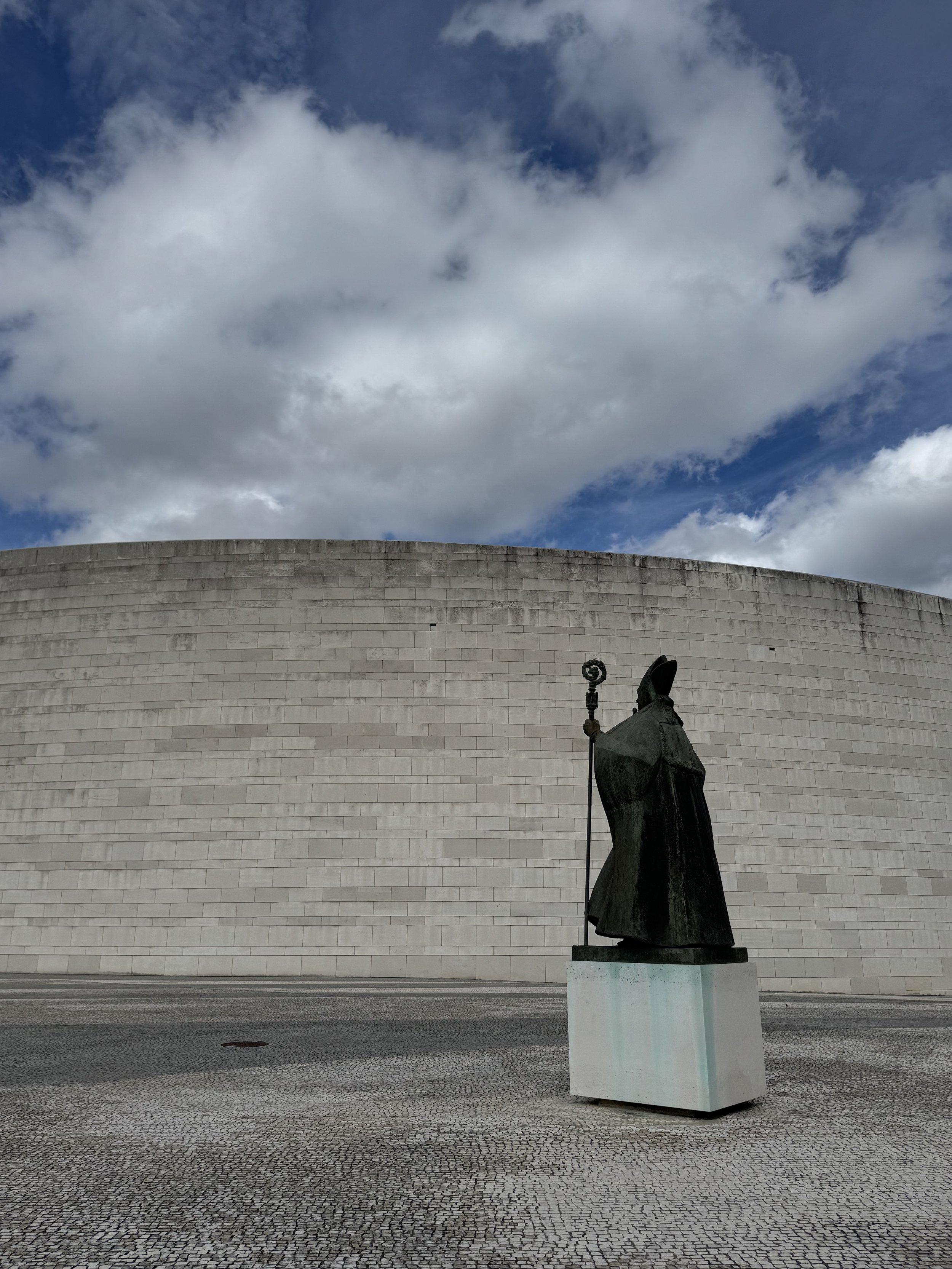
Basilica of the Most Holy Trinity
I arrived an hour or so before I could check in to my hotel, but I had chosen a spot for lunch. I walked through the main plaza of the city, all grey stone and stark lines of the Basilica. It was like stepping into another world, where the lines demarcating a place of worship blur and disappear, instead forming a dome around the entire city. The streets were sparsely filled, as I was there in February. The annual pilgrimages happen between May and October. While a bit eerie to be so empty, I don’t think I would have enjoyed it as much at the height of Catholic tourist season.
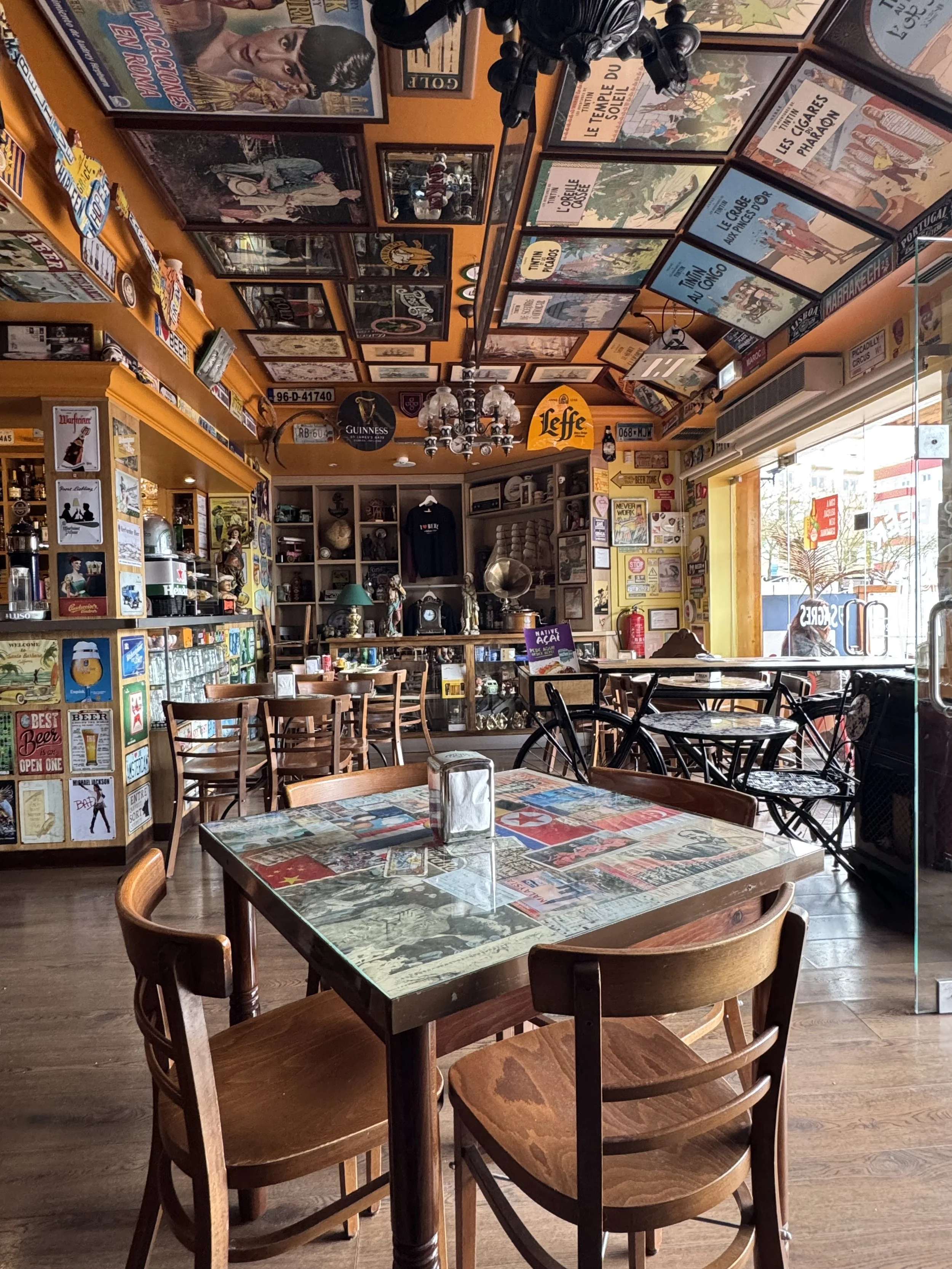
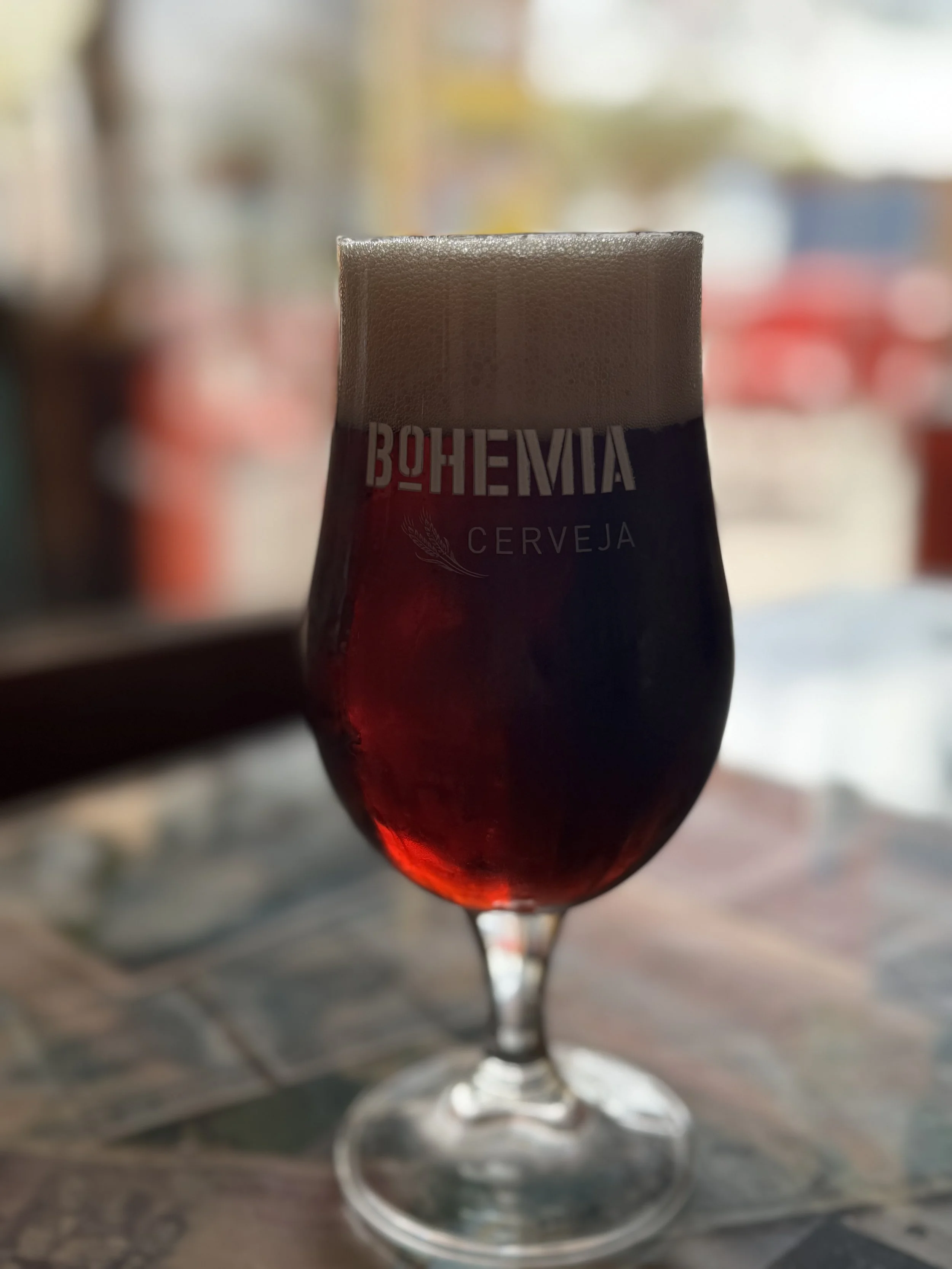
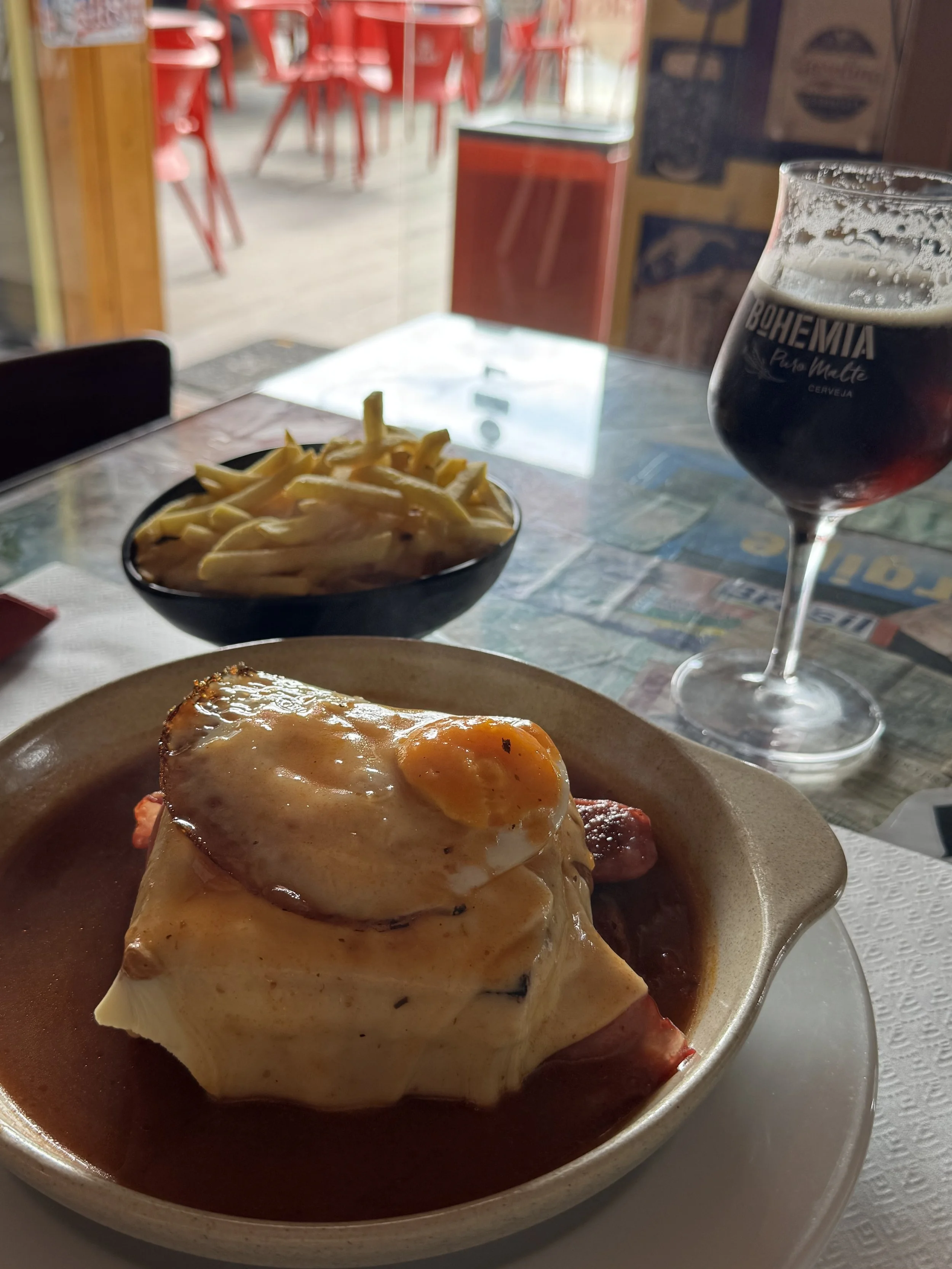
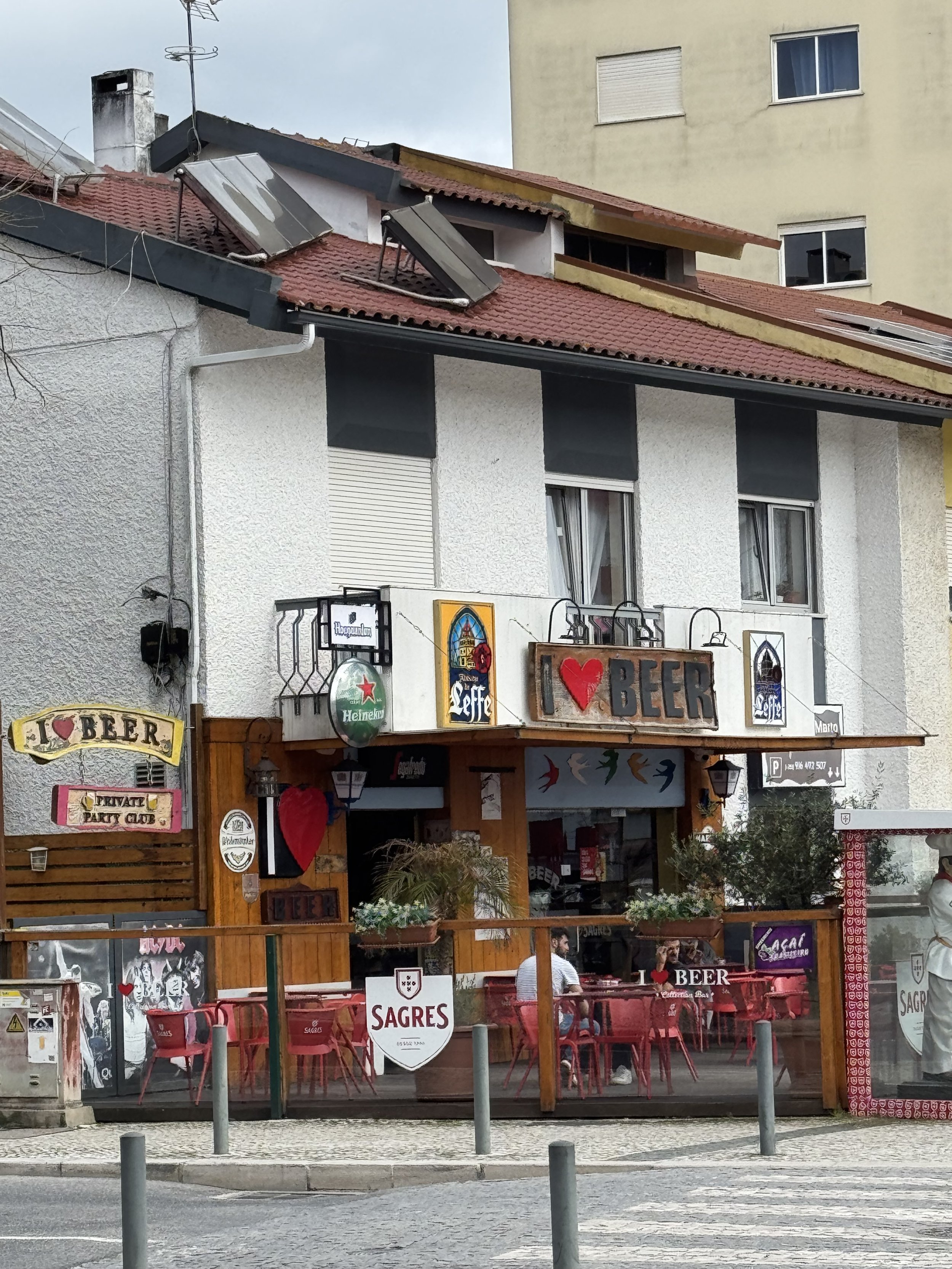
Like the heathen that I am, the place I chose for lunch was a bar aptly named “I Love Beer,” and just like that, I knew where I was in the world again. It was here that I tried a culinary staple for the first time - Francesinha, a Portuguese sandwich of sorts. A bit like a Kentucky Hot Brown, a Francesinha starts with toasted bread and is then loaded with sliced meat, cheese, and a fried egg before being smothered in a tomato and beer sauce. It sounded both delicious and a bit disgusting, like most good bar food. Paired with a Bohemia on draft, it was perhaps my favorite Portuguese meal of the whole trip.
Restaurant - Bar I Love Beer | CITY
TRAVEL ADVICE:
Know yourself.
It may not surprise you to hear that I didn’t particularly love the food in Portugal. I enjoyed the beer and wine immensely. I adored the pastries and the coffee. But unfortunately, I tolerated most everything else. Hence, the reason why I alternatively chose many Asian restaurants over the course of my travels. But that doesn’t mean I didn’t try the local cuisine. I did, and when I found things I really enjoyed, I went back to those again and again. However, if I didn’t like something I ordered, I just didn’t eat it. Now, not everyone will agree with me on this. I know that some people believe it impolite to not finish food. I have decades of disordered eating habits that I am still recovering from. No matter where I am in the world, that doesn’t disappear.
Where is the “travel advice”? Be willing to try new things, new foods, new cuisines. But also, be mindful enough to know yourself. Be okay with saying “There is nothing wrong with it. I just didn’t like it.” I had one meal in particular while in Portugal, where I enjoyed the bread, olive oil, and wine, that’s it. The two dishes I ordered were just not it for me. I didn’t complain or ask for a comped meal. I payed for my half-finished meal and just chocked it up to me, my personal tastes and perhaps my bad ordering. I would do better next time. And I did! I stopped at a pastry shop on the way home to my little studio and got the most AMAZING pastries. Do I love all Portuguese food? No. But I love some of it. And that’s okay too.
THE HIGHLIGHTS FOR ME WERE:
Grutas da Moeda, or Coin Caves
I am almost positive that I learned about these caves from an Instagram reel or story, but I can’t seem to find it now. But, no matter; it served its purpose, steering me in the right direction. I pulled it up on Google Maps, pinned it, and then worked my trip around it. I am not sure what fascinates me so much about cave systems, as at this point, I don’t think I had been in any. Underground, yes. Natural caves, no. I have since rectified this oversight on my part and have visited four different caves in the US, but that is a story for another time.
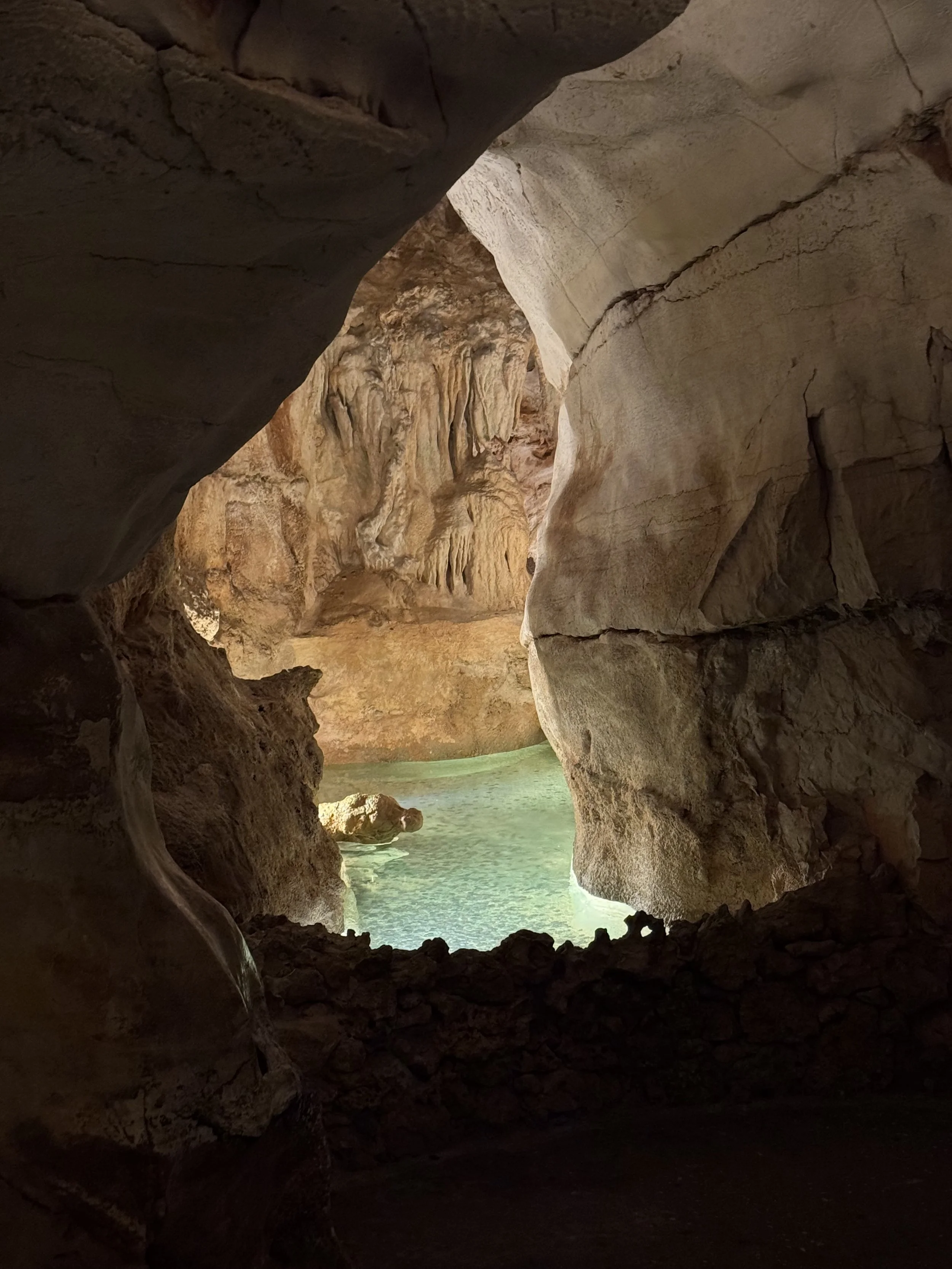
Coin Caves
Located in São Mamede, the Coin Caves were discovered in 1971 as most caves are found, by accident and searching for something else. The culprits in this case were two huntsmen chasing one very lucky fox. I like to think that the huntsmen gave up on pursuing the fox after discovering the caves, allowing him to safely escape. The caves are 45 meters (147 feet) below ground, and the length available to tour measures 350 meters (1,148 feet). The metric system, am I right? As the caves were my motivation for coming to Fatima, they were the first excursion I embarked on the morning after my arrival.
I walked about a mile and a half from the city center to the cave’s entrance. Complete with an interpretive center, a cafe, and a gift shop, the area was small and unassuming. But, I knew I was in the right place because the large sign at the entrance read “Grutas da Moeda.” I went inside, scanning my digital reservation for a physical ticket and was lead to the cave’s entrance. I was surprised to find that I would be going alone. I think you can schedule a private guide, but I did not. There was an audio guide available, and I did take advantage of that. My self-guided tour began with a steep set of stairs taking me underground, and with each step I descended, the temperature dropped slightly. Once firmly at the bottom, I set off into the cave.
Click HERE to experience the cave with me!
After exploring the Coin Caves, I began my walk back to Fatima, detouring slightly in search of another “bar-style” lunch. My first choice was closed, but my second did the trick, serving up crispy chicken wings and a refreshing draft beer. Once sated, I headed back to town determined to explore some of the holy aspects. The Sanctuary, constructed as a shrine to the Virgin Mary, consists of: the Basilica of the Most Holy Trinity - a modern church in both age and aspect, the Chapel of Apparitions - the actual spot where the mother appeared, and the Basilica of Our Lady of the Rosary of Fatima - a Baroque-style spectacle of opulence and beauty.
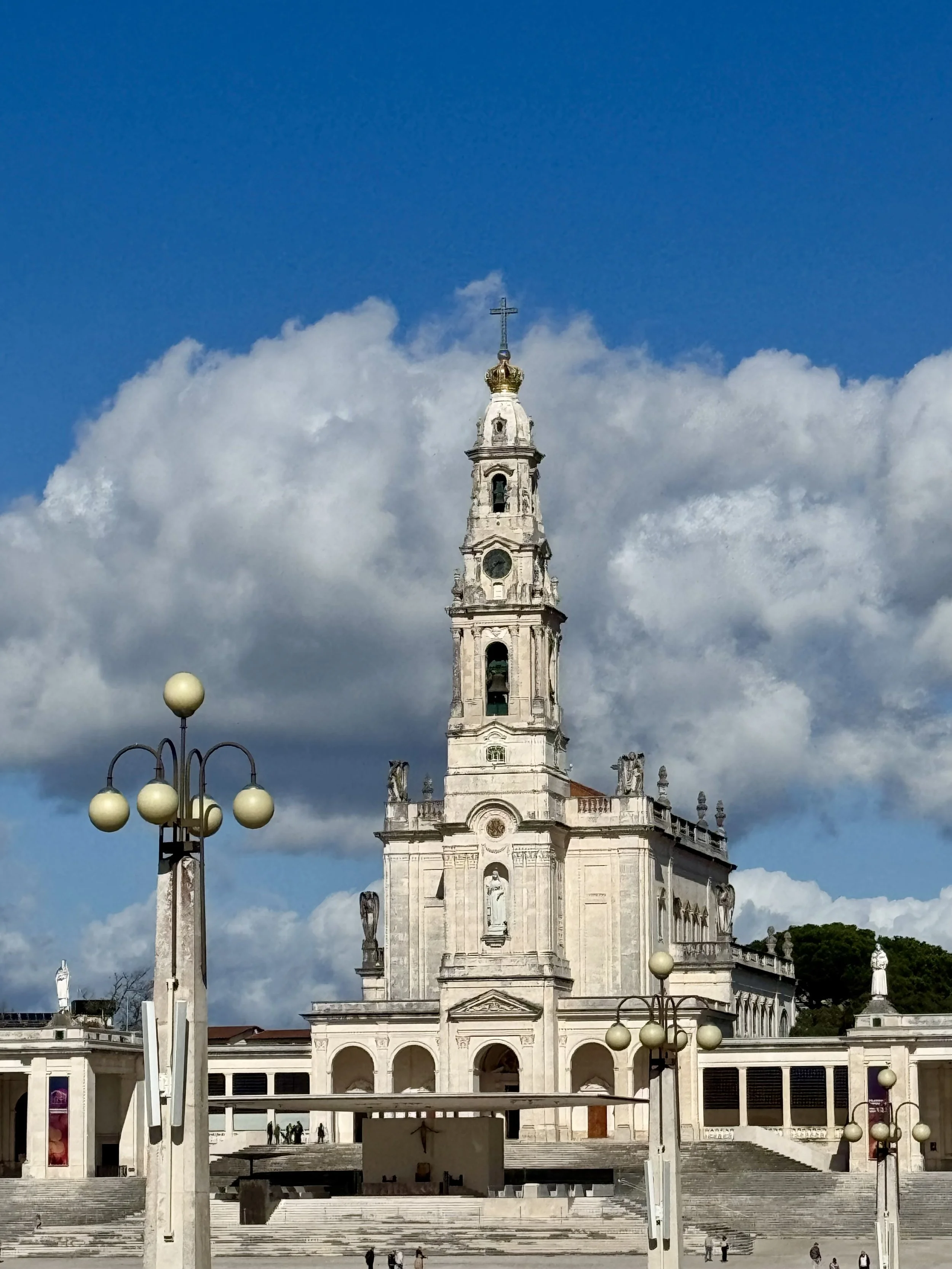
Sanctuary of Our Lady Fatima
Blanketed on each side by sweeping colonnades topped with stone statues of saints and angels, Our Lady of the Rosary was most definitely my favorite. And as I approached the front of the basilica, I couldn’t help but stare up in wonder at the bell tower in its center. And, yes, I did hear the bells toll. I went into the church briefly before descending the stairs again and walking out onto the prayer square. In the very center of it all rose the Monument of the Sacred Heart of Jesus - a gilded bronze statue of Christ with arms outstretched. I stared up at the statue and into the bright afternoon sun blinding my vision, and I thought it striking. I took a moment to think of what a sight like that would mean to someone more faithful, i.e. Catholic. I pictured my maternal grandmother, and it made me smile and tear up at the same time.
I ended the day at a pastelaria for an americano, a pastry, and some quiet contemplation.
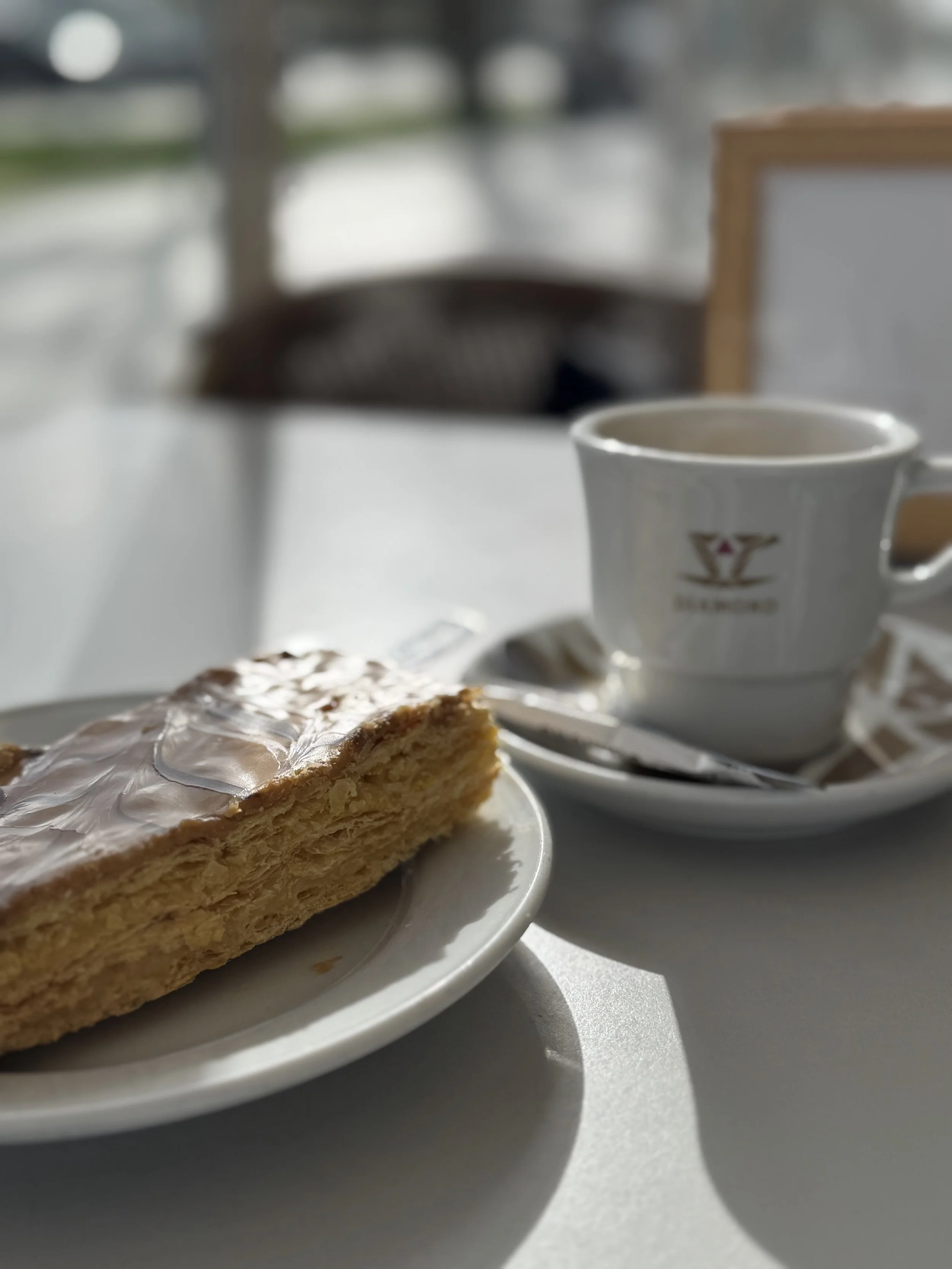
Padaria Heleno
Built in the twelfth century, the Castle of the Templars served as a fortress for over seven hundred years. Combined with the Convent of Christ, this vast area serves as a monument to the Templar knights and the pilgrims they protected. It is also a UNESCO World Heritage Site. I took a local bus from Fatima, and after arriving in Tomar, I climbed up a rather steep hill of ancient-looking cobblestones to the aforementioned medieval fortress. I approached the castle as a reader does a book, wishing for a story - one that transports me to another time.
Click HERE to spend a day with me in Tomar.
After wandering around the castle’s outer walls, I headed inside to the Convent of Christ. The castle and convent occupy the same grounds and historic distinction. The Convent was built within the walls of Castle Tomar and belonged to the Order of the Templars. It was free to walk around the grounds of the castle, but I paid a fee to enter the Convent. Founded by Gualdim Pais in 1160, the Covent was built over the span of five hundred years, imbuing it with a wide range of architectural styles.
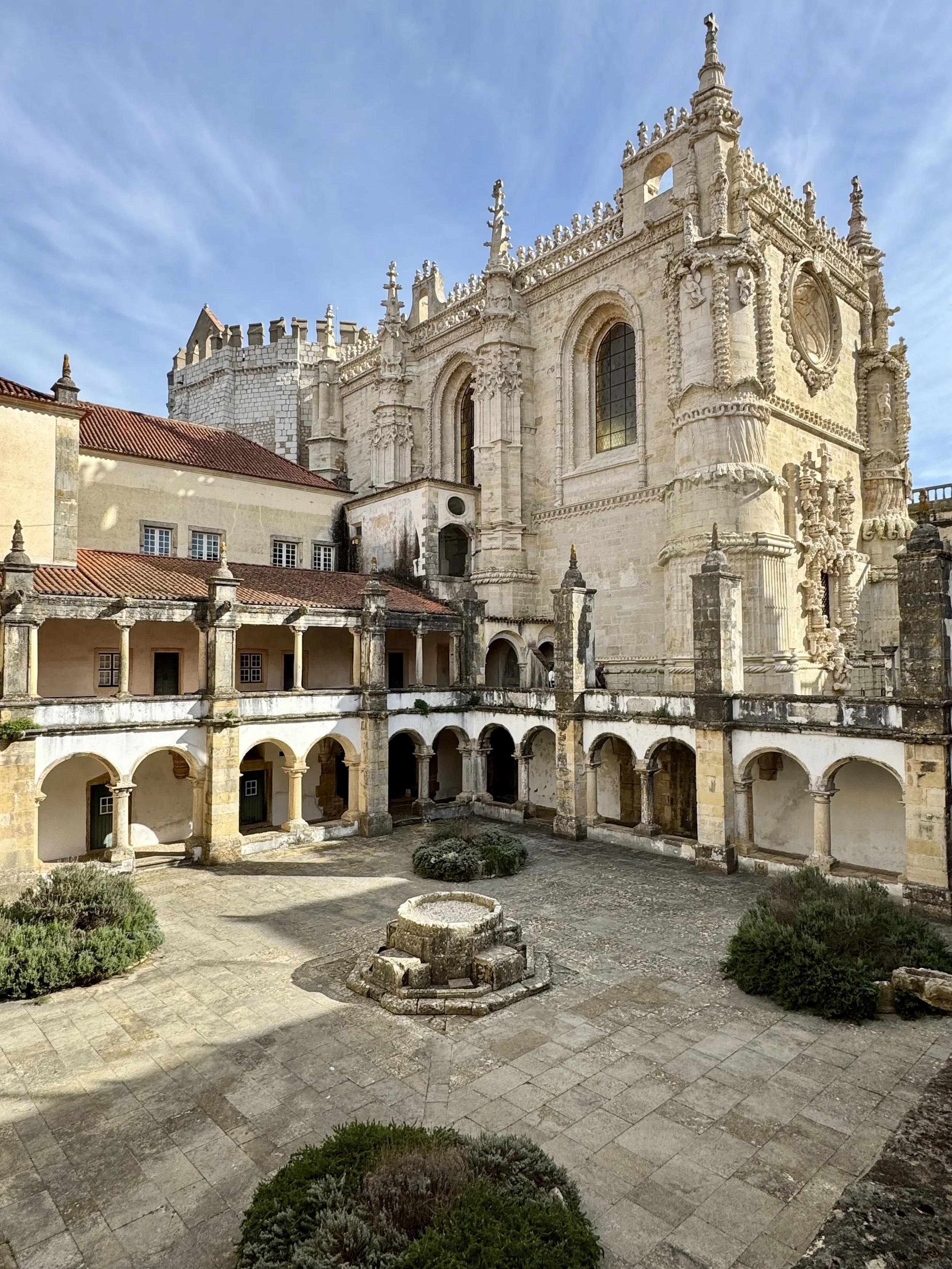
Convent of Christ
I started my tour in the Great Cloister, walking around the quadrangle before heading upstairs to get another view from the floor above. It was beautiful in its simplicity - a combination of arched stone, blue and white tiles, and weather-worn colonnades. I left the open-air walk to enter the opulence of the Oratory of the Templars. This structure is hard to explain in full. It was inspired by the Church of the Holy Sepulchre in Jerusalem and is evocative of the Crusades.
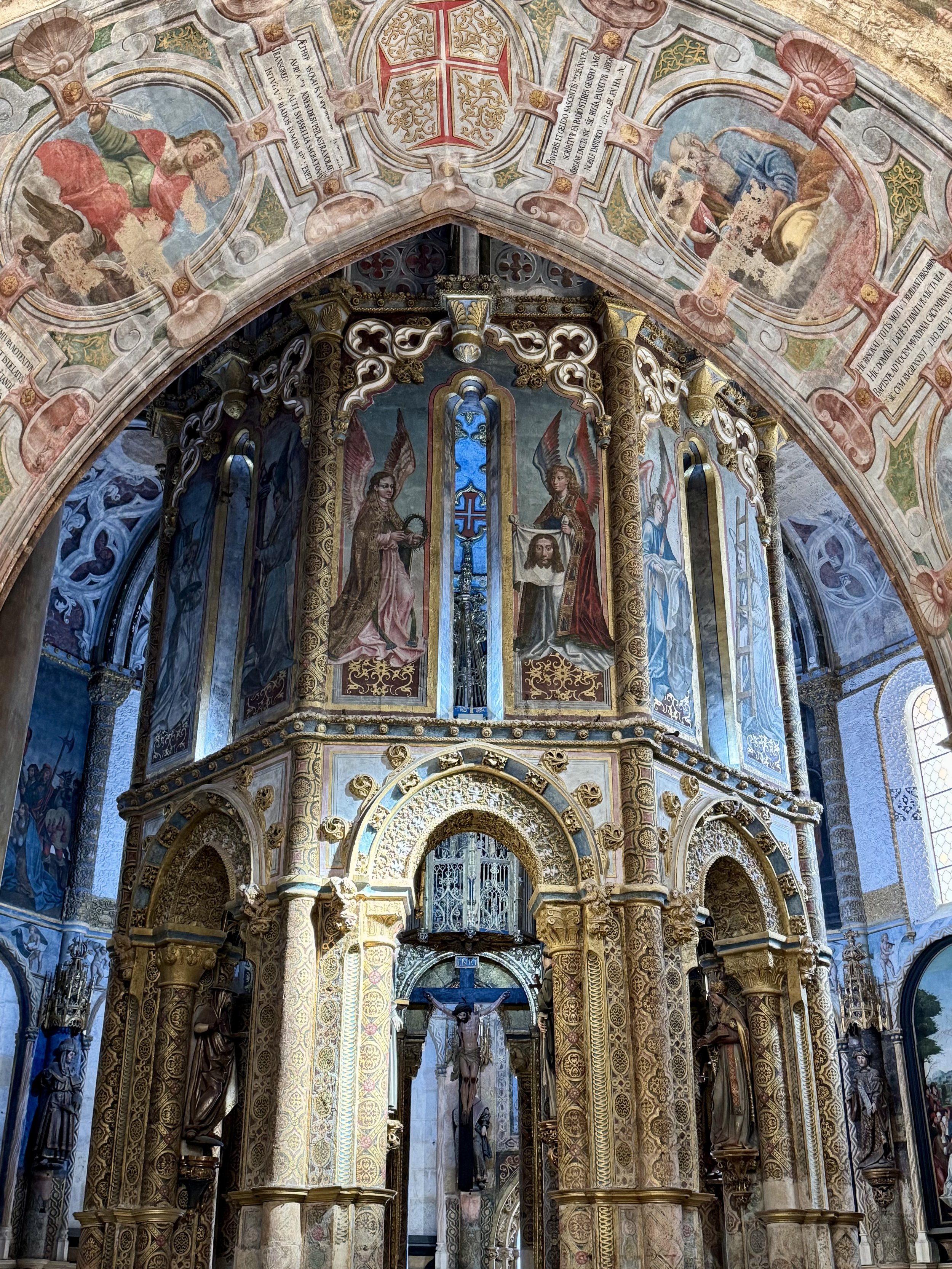
Oratory of the Templars
The core of the rotunda is surrounded by an ambulatory, so knights could ride in on horseback. Marble columns, wood carvings gilt in gold, and intricate paintings adorn every available surface from floor to ceiling. The dome is spectacular both in terms of its religious importance and, also, its aesthetic value. I have seen many a magnificent site, but this was singular in its potency. It was quite a change from the quiet simplicity of the cloister from which I came. I continued visiting the remaining historic cloisters; the Convent contains a total of eight. I ended my tour with a long look at the Manueline Window - a unique and famous architectural feature of Tomar. It is said to symbolize the “Tree of Life.”
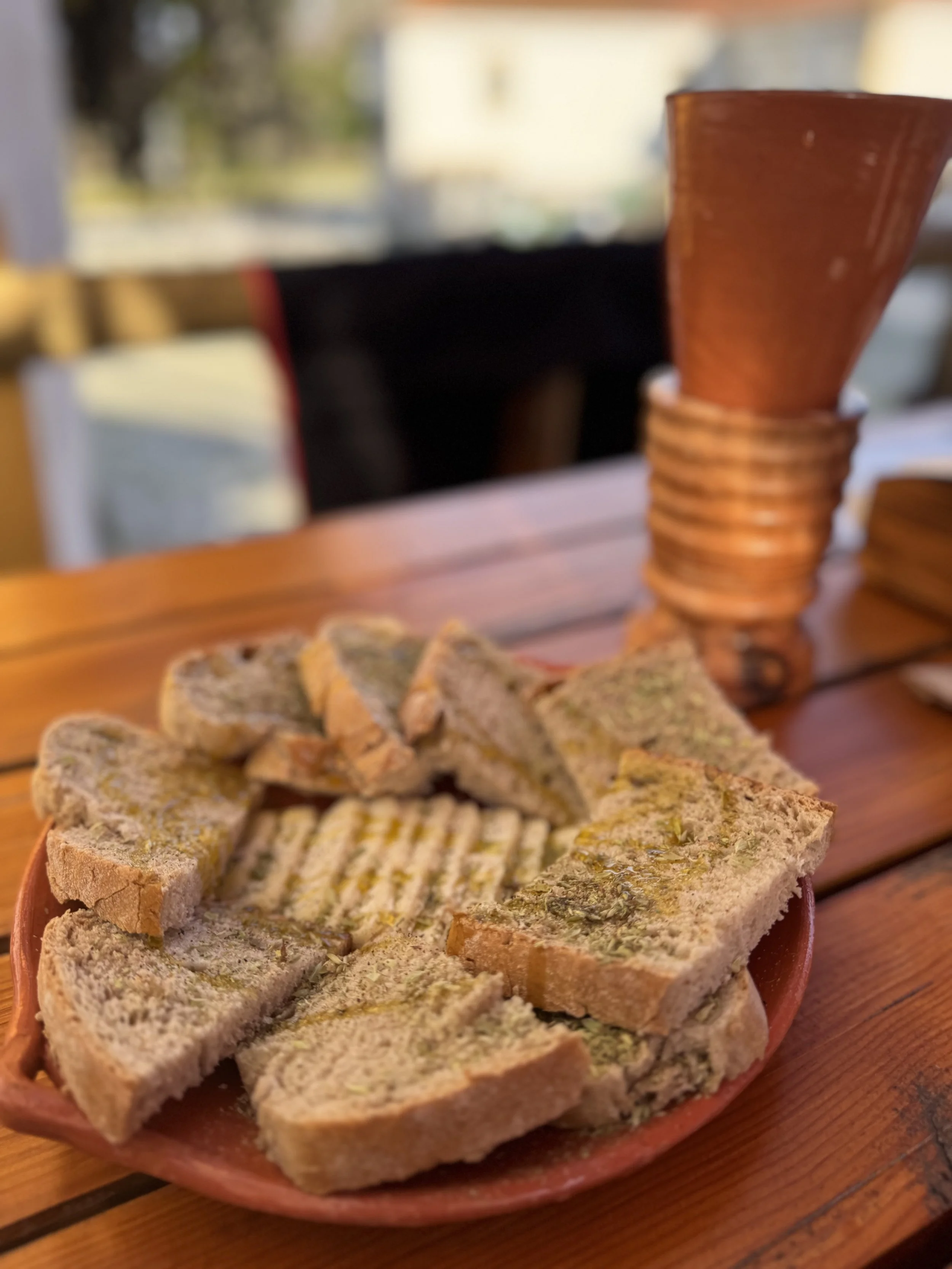
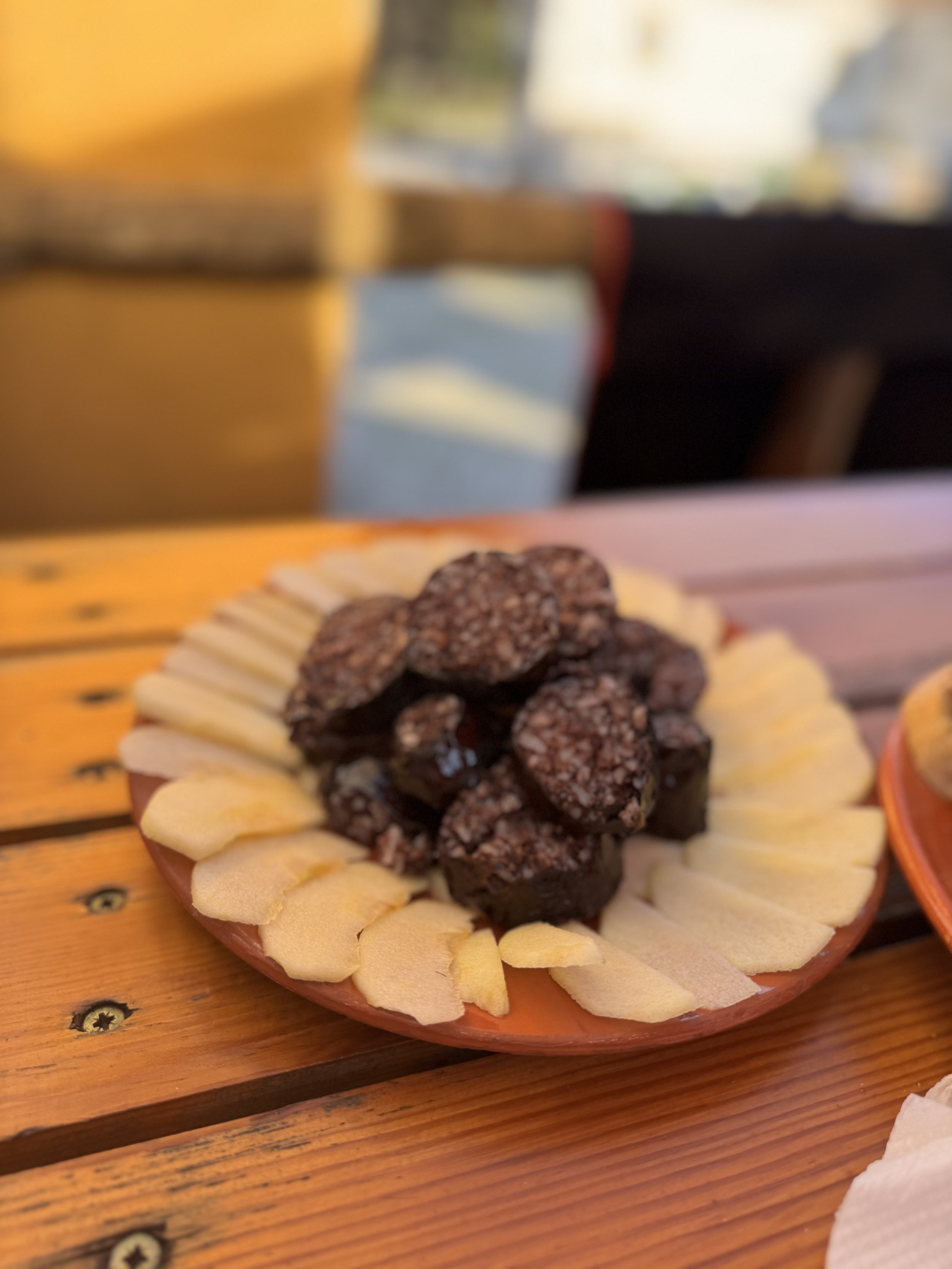
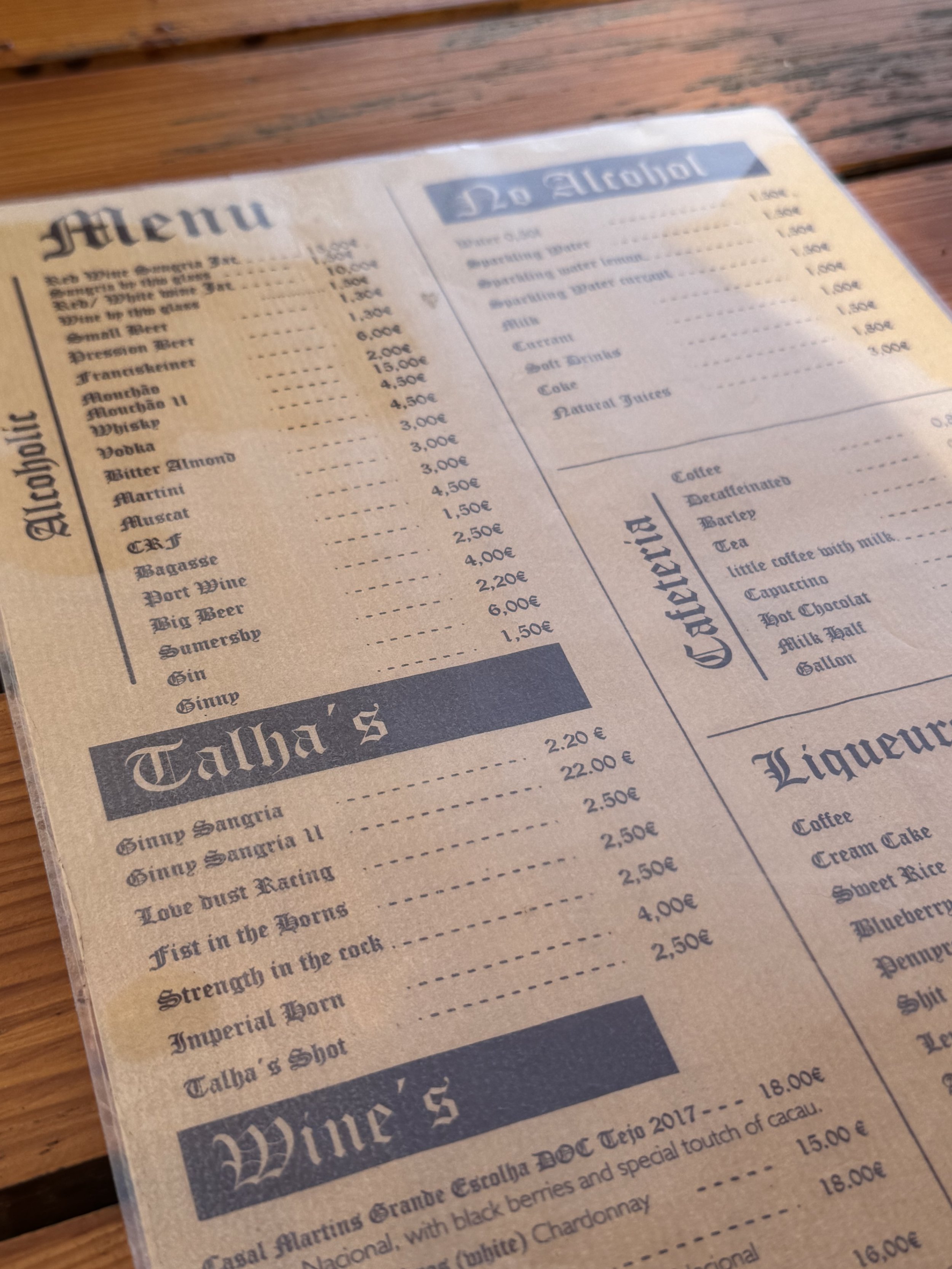
Restaurant - Taverna d'Talha
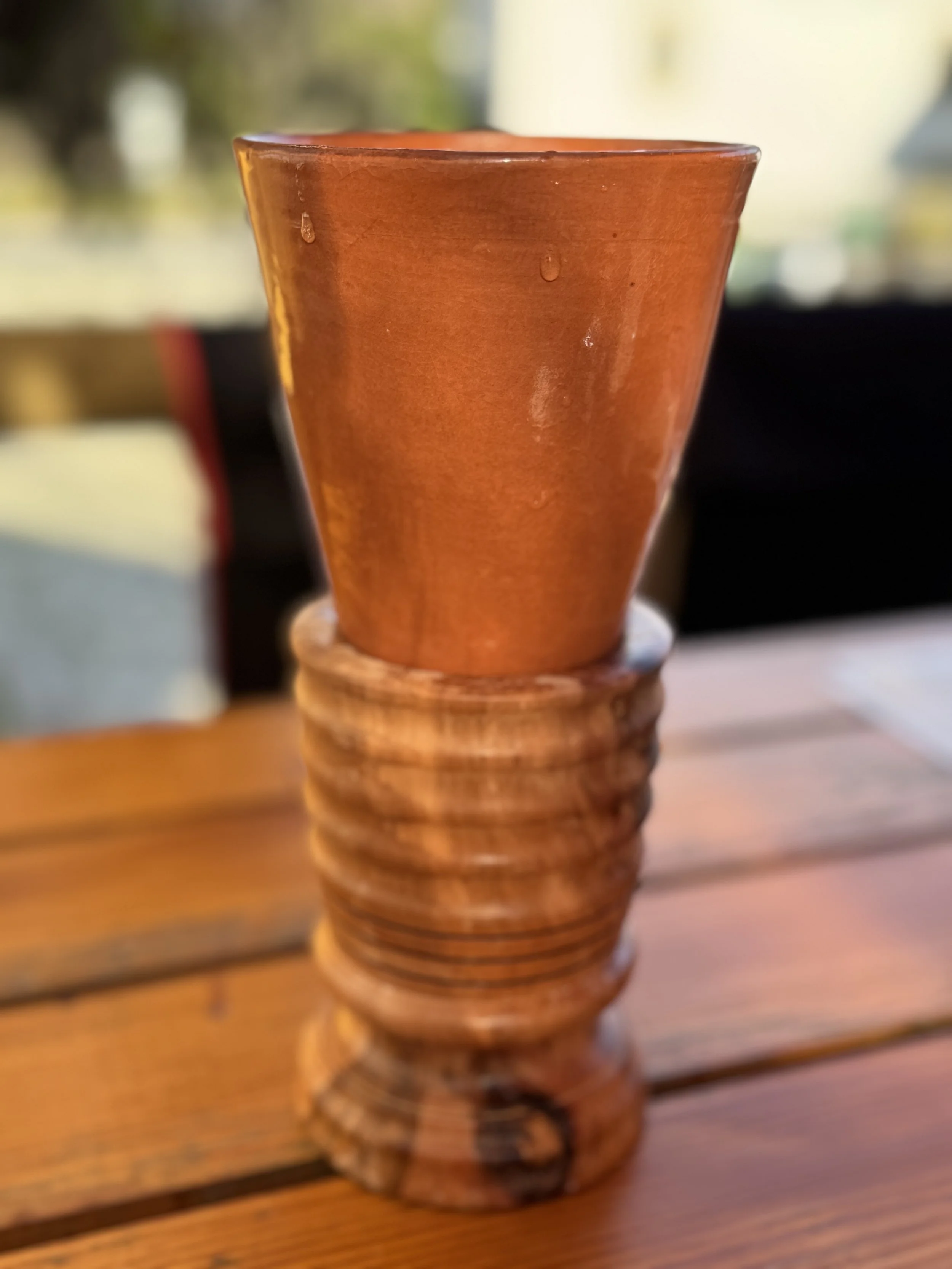
After visiting both the Castle and the Convent, I had built up quite an appetite. I climbed back down the hill towards the town of Tomar, stopping at this taverna for lunch. I ordered a beer, served in a cool wooden stein, some local cheese, and their daily special - black boudin. I have had both black pudding and boudin before, but never have I had them combined. I was intrigued. I was in Tomar. I was having a fabulous time. I was feeling adventurous. And it paid off. The cheese was served with bread, and the boudin with sliced apple. It was delicious! Perhaps the best boudin I have ever tasted. I ate it all. The chef came out, and I told him as much.
WHAT I WAS READING: An Engagement with the Enemy by Sally Britton
WHAT I WAS WATCHING: Charlie’s Angels, Martian Child, Soju Rhapsody
